Who uses it: Civil engineers
What it means: A roughly-built sustaining wall of stones or concrete, alongside or under a river or stream, designed to prevent erosion
How to use it: To describe something that's just jumbled together, but still effective.
Dizzy and I start our walks most mornings behind the Standard Distributors warehouse, where you can follow a rocky path to a riprap wall by the Cobbossee Stream. It's getting late in the season to climb the rocks, which are already slick with moss and falling leaves. Soon they'll be icy, and we'll have to change our route.
I got a lot of work done earlier this week, and am now reading manuscripts for friends, so my reading list is not yet back up to its usual length. Maybe next week.
Anna, starting yet another trip last week, e-mailed me a list of the books she was taking along, a nice collection of midlist literary novels. "Why don't you ever read books like that?" she asked. I felt reproached.
But writing newsletters for two mystery bookstores has turned a general preference into an obligation, to some extent; I like to read crime fiction, but I also feel I need to read most of the books I'm writing about, even if I'm just writing short blurbs. Through this work I've been lucky enough to meet many authors who are very nice people, and I want to read books written by people I like. Finally, people pay me to read books, either as movie coverage or for research projects.
That leaves me with very little time to read sensitive, well-written books about middle-class people going through ordinary life crises. Frankly, if I want to read sensitive, well-written stuff about middle-class people going through ordinary life crises, I can just go back and read my journals from the 1990s. (Ooh, that sounds bad! I don't care, I'm not taking it back.) I'd rather read about things I'll never do and people I'll never meet... so here's my list of
What I Read This Week
Juris Jurjevics, The Trudeau Vector. Clunky prose and a couple of really dreadful sex scenes did not interfere with my thorough enjoyment of this Arctic thriller. Dr. Jessica Hanley, an epidemiologist, goes to a polar research station in the middle of winter to investigate the deaths of three scientists who appear to have frozen to death from the inside out. Hanley's inclined to rule out an infectious agent, but discovers that an entire submarine of Russian sailors has died from the same cause -- and then two more scientists in the research station die. I'm always fascinated with tales of polar exploration, and the descriptions of the Arctic night are terrific.
Robert Griffin, Affectionately, Wallace: The Life and Work of W.W. Gilchrist. I was unfamiliar with the work of this Maine artist, a student of Winslow Homer's whose work resembles both Homer's and John Singer Sargent's. This is a lovely book written by the artist's grandson, who was nice enough to send me a copy; it's a fine introduction to a gifted painter.
Neil Gaiman, American Gods. I first read this book in the strange, sad summer of 2002, when we were all still processing the events of September 11, and it felt like a long dream, or a recovered memory. I wanted to reread it before I read the sequel, Anansi Boys -- partly to refresh my memory of the book's plot, but mostly to see whether it was as good as I remembered. If anything, it's better. Gaiman imagines a United States inhabited by all the gods, demigods and demons its immigrant settlers carried with them; but as many of Gaiman's characters note, this is a bad country for gods, and only an apocalyptic battle will save them. This book is fantasy, travelogue, survey course of the world's religions, and the best meditation on the American character since de Tocqueville's Democracy in America. If you haven't already read it, buy it this weekend.
Friday, September 30, 2005


Thursday, September 29, 2005
Nunc pro tunc
Who uses it: Lawyers
What it means: "Now for then," when you're filing something late but back-dating it to meet a deadline that has passed.
How to use it: "Better late than never," which is actually one of the few things I remember how to say in Russian: "Luchi pozhna, tchem nikagda."
Thanks to Pam LaMarca and Paul Tomme for this phrase, which is endlessly useful for procrastinators like me.
This morning I had breakfast with Colette Mooney, Deputy Superintendent of the Maine Bureau of Financial Institutions and someone I have known, in a work capacity, for almost 20 years. I should have called Colette when I first got here, nearly a year ago... but nunc pro tunc. (See how easy it is?)
Walking down to the A-1, I saw my first fuzzy caterpillar of the season. They say you can tell how severe the winter will be by how fuzzy the caterpillars are; but how fuzzy is fuzzy? I can't remember how fuzzy last year's caterpillars were, or even if I saw any. Saving one of this year's caterpillars so I can compare it to next year's is a little too Hannibal Lecterish to contemplate.
Colette gave me another good story about the abandoned paper factory across the street from me. Back in the days when bank examinations were all on paper (now they're entirely electronic), the Bureau used to discard confidential examination reports by putting them into the paper factory's pulp vats. It's a great idea for a crime story: a resourceful factory worker who managed to retrieve a copy of a confidential examination report on a bank could use it for all kinds of blackmail. Of course, that could never have happened in real life, mainly because most of the information in examination reports is boring and incomprehensible to laymen. But I still like the idea.
What it means: "Now for then," when you're filing something late but back-dating it to meet a deadline that has passed.
How to use it: "Better late than never," which is actually one of the few things I remember how to say in Russian: "Luchi pozhna, tchem nikagda."
Thanks to Pam LaMarca and Paul Tomme for this phrase, which is endlessly useful for procrastinators like me.
This morning I had breakfast with Colette Mooney, Deputy Superintendent of the Maine Bureau of Financial Institutions and someone I have known, in a work capacity, for almost 20 years. I should have called Colette when I first got here, nearly a year ago... but nunc pro tunc. (See how easy it is?)
Walking down to the A-1, I saw my first fuzzy caterpillar of the season. They say you can tell how severe the winter will be by how fuzzy the caterpillars are; but how fuzzy is fuzzy? I can't remember how fuzzy last year's caterpillars were, or even if I saw any. Saving one of this year's caterpillars so I can compare it to next year's is a little too Hannibal Lecterish to contemplate.
Colette gave me another good story about the abandoned paper factory across the street from me. Back in the days when bank examinations were all on paper (now they're entirely electronic), the Bureau used to discard confidential examination reports by putting them into the paper factory's pulp vats. It's a great idea for a crime story: a resourceful factory worker who managed to retrieve a copy of a confidential examination report on a bank could use it for all kinds of blackmail. Of course, that could never have happened in real life, mainly because most of the information in examination reports is boring and incomprehensible to laymen. But I still like the idea.
Wednesday, September 28, 2005
Leeway
Who uses it: Sailors
What it means: The side-slippage of a boat downwind (leeward). Leeway happens because water and wind push rudders, keels and centerboards; you can turn the rudder to point the boat the way you want to go, but you have to adjust for leeway. Different boats have different, but predictable, amounts of leeway.
How to use it: To excuse deviation from your intended course.
Thanks to my dad for suggesting this term, which has become a common expression even though most people have no idea what it refers to. (Other sailing terms in daily use: taking a different tack, sailing too close to the wind, jury rig... you'll see a lot of these over the next 11 months.)
People use "leeway" to give themselves some slack (another sailing term), but if you're serious about plotting your course, you include a specific amount of leeway in your calculations. In the days before LORAN and GPS, even a single degree's miscalculation could send a boat miles off course, so you needed to know exactly how much leeway you had.
Now, of course, even cars have GPS, which takes a little adventure out of life. Assuming you know how to use the GPS, that is. My Uncle Ziggy has a brand-new handheld GPS he was using this past weekend, and when he and my Aunt Debbie arrived late to dinner, the rest of us made some ungenerous and probably unfair remarks about the new toy. Sorry about that... you know we're all just jealous.
Another summer has come and gone, and I never did get out on the water this year, except briefly in a kayak off Martha's Vineyard last month. This morning Dizzy and I walked down to Gardiner Landing, where they'll be taking the floating docks in soon. Maybe next year I'll get a boat of my own.
What it means: The side-slippage of a boat downwind (leeward). Leeway happens because water and wind push rudders, keels and centerboards; you can turn the rudder to point the boat the way you want to go, but you have to adjust for leeway. Different boats have different, but predictable, amounts of leeway.
How to use it: To excuse deviation from your intended course.
Thanks to my dad for suggesting this term, which has become a common expression even though most people have no idea what it refers to. (Other sailing terms in daily use: taking a different tack, sailing too close to the wind, jury rig... you'll see a lot of these over the next 11 months.)
People use "leeway" to give themselves some slack (another sailing term), but if you're serious about plotting your course, you include a specific amount of leeway in your calculations. In the days before LORAN and GPS, even a single degree's miscalculation could send a boat miles off course, so you needed to know exactly how much leeway you had.
Now, of course, even cars have GPS, which takes a little adventure out of life. Assuming you know how to use the GPS, that is. My Uncle Ziggy has a brand-new handheld GPS he was using this past weekend, and when he and my Aunt Debbie arrived late to dinner, the rest of us made some ungenerous and probably unfair remarks about the new toy. Sorry about that... you know we're all just jealous.
Another summer has come and gone, and I never did get out on the water this year, except briefly in a kayak off Martha's Vineyard last month. This morning Dizzy and I walked down to Gardiner Landing, where they'll be taking the floating docks in soon. Maybe next year I'll get a boat of my own.
Tuesday, September 27, 2005
Reaction formation
Who uses it: Psychiatrists and psychologists
What it means: Behavior or emotion that is the polar opposite of the way someone is or should be feeling, because the authentic emotion is too frightening to deal with.
How you can use it: To explain your otherwise inexplicable behavior.
Reaction formation explains the Stockholm Syndrome, where kidnap victims ally themselves with their captors. It's why abused children often seem more attached to their abusive parent. It's also why I apologize profusely to total strangers who want to know why I have not yet done them massive favors other people have promised on my behalf. Hmm.
It may also explain why, when I found my brand-new passport in yesterday's Tub of Mail (Postmaster Jerry asked: "How long have you been away?"), I immediately suggested to my friend Dan that I hop a plane across the Atlantic to spend this weekend on the Welsh border, harassing him and teasing his chickens (no, that's not a naughty metaphor; he really does keep chickens). Dan, bless his heart, was game, but I couldn't find a decent fare, and in the time it took me to click through Expedia, Travelocity, BestFares.com and American Airlines, I realized that I had simply lost whatever was left of my mind.
I need not to go anywhere for a while. I need to stay home and clean my apartment and put away my window fans and vacuum all the dog hair out of my car. I need to go to Curves and start my ice-skating lessons and not be rushing around like someone on the run from the law.
I want to stay home for a while. Really.
What it means: Behavior or emotion that is the polar opposite of the way someone is or should be feeling, because the authentic emotion is too frightening to deal with.
How you can use it: To explain your otherwise inexplicable behavior.
Reaction formation explains the Stockholm Syndrome, where kidnap victims ally themselves with their captors. It's why abused children often seem more attached to their abusive parent. It's also why I apologize profusely to total strangers who want to know why I have not yet done them massive favors other people have promised on my behalf. Hmm.
It may also explain why, when I found my brand-new passport in yesterday's Tub of Mail (Postmaster Jerry asked: "How long have you been away?"), I immediately suggested to my friend Dan that I hop a plane across the Atlantic to spend this weekend on the Welsh border, harassing him and teasing his chickens (no, that's not a naughty metaphor; he really does keep chickens). Dan, bless his heart, was game, but I couldn't find a decent fare, and in the time it took me to click through Expedia, Travelocity, BestFares.com and American Airlines, I realized that I had simply lost whatever was left of my mind.
I need not to go anywhere for a while. I need to stay home and clean my apartment and put away my window fans and vacuum all the dog hair out of my car. I need to go to Curves and start my ice-skating lessons and not be rushing around like someone on the run from the law.
I want to stay home for a while. Really.
Monday, September 26, 2005
Fortress of Solitude
Who uses it: Superman
What it means: A secret underground retreat, 130 miles south of the geographic North Pole, that serves as a memorial to the planet Krypton and a place for Superman to conduct research and escape the demands of the world. Only Superman's dog, Krypto, gets to come with him to the Fortress of Solitude, though Supergirl has her own annex.
How to use it: When you're pretending to be Superman and need to get away.
Home. I could sleep for about 48 hours, but have a lot to do today: mail, tutoring, general catching-up with myself.
What I have learned from this trip is that five destinations and six projects are too much for one three-week period. Five destinations and two projects might be okay; six projects and no destinations would be fine. But I will not do this to myself again, especially since I dropped the ball badly on one of those projects and was less than satisfied with my work on another.
I need to practice saying the words "I can't." Someone said those words to me recently, and although I didn't want to hear them, their absolute simplicity and effectiveness are undeniable. "I can't" needs no explanation and requires no apology. It's just a statement of fact; no reasonable person could argue with it or take offense.
Superman might never say, "I can't," but Superman and I don't have much in common. Even though Gardiner is pretty far north.
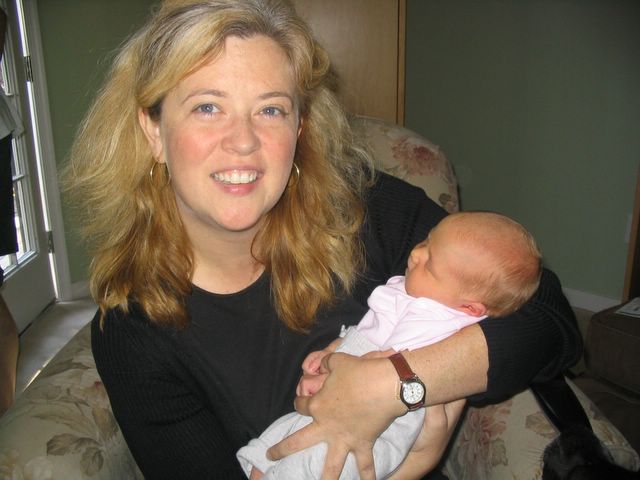
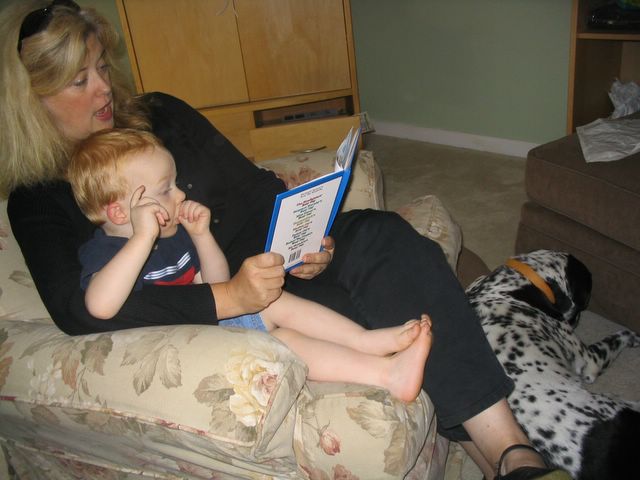
My brother-in-law Scott has posted new photos of the Lavinder clan on their family blog, including a photo of my first meeting with Baby Meg. I don't seem to be able to post the photos here, so click here and here to see us.
What it means: A secret underground retreat, 130 miles south of the geographic North Pole, that serves as a memorial to the planet Krypton and a place for Superman to conduct research and escape the demands of the world. Only Superman's dog, Krypto, gets to come with him to the Fortress of Solitude, though Supergirl has her own annex.
How to use it: When you're pretending to be Superman and need to get away.
Home. I could sleep for about 48 hours, but have a lot to do today: mail, tutoring, general catching-up with myself.
What I have learned from this trip is that five destinations and six projects are too much for one three-week period. Five destinations and two projects might be okay; six projects and no destinations would be fine. But I will not do this to myself again, especially since I dropped the ball badly on one of those projects and was less than satisfied with my work on another.
I need to practice saying the words "I can't." Someone said those words to me recently, and although I didn't want to hear them, their absolute simplicity and effectiveness are undeniable. "I can't" needs no explanation and requires no apology. It's just a statement of fact; no reasonable person could argue with it or take offense.
Superman might never say, "I can't," but Superman and I don't have much in common. Even though Gardiner is pretty far north.
My brother-in-law Scott has posted new photos of the Lavinder clan on their family blog, including a photo of my first meeting with Baby Meg. I don't seem to be able to post the photos here, so click here and here to see us.
Sunday, September 25, 2005
Brix
Who uses it: Winemakers
What it means: The amount of sugar in wine that's fermenting
How you can use it: As a snooty way to refer to the sweetness of anything. "Tasty, but its Brix is too high."
Thanks to my cousin Rich for this word. He makes his own wine, which is not for sale; we drank a bit of it last night at my Uncle Eddie's and Aunt Marie's, and it was excellent. The label on the bottle -- courtesy of Rich's wife Diane -- says "Agnello," and if you don't know what that means, you can darn well go and look it up. I'm pretty sure the answer is somewhere on this page, and if it's not, it's on my profile page. We like name puns in this family, which is the only possible explanation for my own name.
The past couple of days have been a blur. Friday was a day that deserves its own rant at a later time, as I learned that "Use of the Library of Congress is a privilege extended to the public by the Congress of the United States," which 1) was not Mr. Jefferson's intent and 2) has the effect of turning what used to be a working library into a book museum. I also want to say that the Kinko's/FedEx store at Eastern Market is the worst, most under-staffed, dirtiest, most poorly-equipped Kinko's I've ever been in, and a disgrace to a company that used to be known for excellence.
I managed to redeem the day with a trip to Annapolis, meeting Keith and Vikki Bea to see Our Chris in a production of Othello at St. John's. Chris, as Gratiano, was only in the last couple of scenes, but since Gratiano (spoiler alert...) winds up with all of Othello's riches at the end of the play, Chris pointed out that one could make an argument that the entire sequence of events is an elaborate conspiracy between Gratiano and Michael Cassio (who winds up Governor of Cyprus). (Okay, if that wrecks the plot of Othello for anybody, too bad, and you shouldn't admit that to anyone.)
Yesterday afternoon was the 100th birthday celebration for my great-aunt, Agnes Colloton, the only surviving member of my grandfather Lamb's generation. Aunt Agnes and Grandpa were part of a family of 8 or 9 (Dad?), and yesterday I felt a little overwhelmed by all the first cousins once removed and second cousins I'd never met before. Identifying myself as "Jimmy's daughter," or even as "Ed's granddaughter," didn't help, either, since most of the men in this family seem to be named either James or Edward. My own Uncle Eddie and my aunt's husband, Ziggy, said that the next time we have an event like this, there will be a big blank family tree at the door, and everyone will sign in and get a number identifying their position on the tree. That's a good plan, but it'll be a while before the next person in the family turns 100.
It's startling to think that Aunt Agnes was my age in 1945. She's very deaf, but otherwise of sound mind, though she tires easily. She remembers events of years ago as if they were yesterday; when I sat down to say hello to her, she asked me, "What happened with the marriage?" She was asking about the engagement I broke 16 years ago. Time looks completely different from a perspective of 100 years.
What it means: The amount of sugar in wine that's fermenting
How you can use it: As a snooty way to refer to the sweetness of anything. "Tasty, but its Brix is too high."
Thanks to my cousin Rich for this word. He makes his own wine, which is not for sale; we drank a bit of it last night at my Uncle Eddie's and Aunt Marie's, and it was excellent. The label on the bottle -- courtesy of Rich's wife Diane -- says "Agnello," and if you don't know what that means, you can darn well go and look it up. I'm pretty sure the answer is somewhere on this page, and if it's not, it's on my profile page. We like name puns in this family, which is the only possible explanation for my own name.
The past couple of days have been a blur. Friday was a day that deserves its own rant at a later time, as I learned that "Use of the Library of Congress is a privilege extended to the public by the Congress of the United States," which 1) was not Mr. Jefferson's intent and 2) has the effect of turning what used to be a working library into a book museum. I also want to say that the Kinko's/FedEx store at Eastern Market is the worst, most under-staffed, dirtiest, most poorly-equipped Kinko's I've ever been in, and a disgrace to a company that used to be known for excellence.
I managed to redeem the day with a trip to Annapolis, meeting Keith and Vikki Bea to see Our Chris in a production of Othello at St. John's. Chris, as Gratiano, was only in the last couple of scenes, but since Gratiano (spoiler alert...) winds up with all of Othello's riches at the end of the play, Chris pointed out that one could make an argument that the entire sequence of events is an elaborate conspiracy between Gratiano and Michael Cassio (who winds up Governor of Cyprus). (Okay, if that wrecks the plot of Othello for anybody, too bad, and you shouldn't admit that to anyone.)
Yesterday afternoon was the 100th birthday celebration for my great-aunt, Agnes Colloton, the only surviving member of my grandfather Lamb's generation. Aunt Agnes and Grandpa were part of a family of 8 or 9 (Dad?), and yesterday I felt a little overwhelmed by all the first cousins once removed and second cousins I'd never met before. Identifying myself as "Jimmy's daughter," or even as "Ed's granddaughter," didn't help, either, since most of the men in this family seem to be named either James or Edward. My own Uncle Eddie and my aunt's husband, Ziggy, said that the next time we have an event like this, there will be a big blank family tree at the door, and everyone will sign in and get a number identifying their position on the tree. That's a good plan, but it'll be a while before the next person in the family turns 100.
It's startling to think that Aunt Agnes was my age in 1945. She's very deaf, but otherwise of sound mind, though she tires easily. She remembers events of years ago as if they were yesterday; when I sat down to say hello to her, she asked me, "What happened with the marriage?" She was asking about the engagement I broke 16 years ago. Time looks completely different from a perspective of 100 years.
Saturday, September 24, 2005
Friday, September 23, 2005
Peristalsis
Who uses it: Gastroenterologists
What it means: The waves of involuntary contractions that move food through the digestive tract. One byproduct of peristalsis is borborygmy, which is stomach rumbling... thanks to Dr. Rebekah Bartsch for that word, which is going into my active vocabulary immediately.
How you can use it: To describe an inexorable process that you just have to wait out.
I use the word "peristalsis" fairly often -- more in writing than in reading -- because I like the metaphor.
Work and travel are really starting to interfere with my reading time, not to mention my attention span. I'm halfway through three different books that I've had to put down, not because they're bad but because I can't give them the attention they deserve. Thank goodness I'll be home again next week.
What I Read This Week
Peter Spiegelman, Black Maps. John March, the black sheep of a family of investment bankers, investigates a case of blackmail against a lender who had had dealings with a BCCI-style bank more than 10 years earlier. It doesn't take March long to track down the blackmailer, but Spiegelman's strength is in his characters, and in his acute observations about the ways people behave around large sums of money. He also writes beautifully. This book won the Shamus Award for best first novel, and if the postal service has cooperated, the sequel, Death's Little Helpers, will be waiting for me when I get home.
Robert C. Gallagher, Ernie Davis: The Elmira Express. What do you say about a 23-year-old football hero who died? That he was brave; that he worked hard; that he loved his family and friends; that he was a gift to everyone who ever knew him. This slim biography of the first black Heisman trophy winner (Syracuse, class of 1962) is a fine introduction to a story that seems to have been forgotten, but I'd love to see someone take a broader view of Davis's achievements.
What it means: The waves of involuntary contractions that move food through the digestive tract. One byproduct of peristalsis is borborygmy, which is stomach rumbling... thanks to Dr. Rebekah Bartsch for that word, which is going into my active vocabulary immediately.
How you can use it: To describe an inexorable process that you just have to wait out.
I use the word "peristalsis" fairly often -- more in writing than in reading -- because I like the metaphor.
Work and travel are really starting to interfere with my reading time, not to mention my attention span. I'm halfway through three different books that I've had to put down, not because they're bad but because I can't give them the attention they deserve. Thank goodness I'll be home again next week.
What I Read This Week
Peter Spiegelman, Black Maps. John March, the black sheep of a family of investment bankers, investigates a case of blackmail against a lender who had had dealings with a BCCI-style bank more than 10 years earlier. It doesn't take March long to track down the blackmailer, but Spiegelman's strength is in his characters, and in his acute observations about the ways people behave around large sums of money. He also writes beautifully. This book won the Shamus Award for best first novel, and if the postal service has cooperated, the sequel, Death's Little Helpers, will be waiting for me when I get home.
Robert C. Gallagher, Ernie Davis: The Elmira Express. What do you say about a 23-year-old football hero who died? That he was brave; that he worked hard; that he loved his family and friends; that he was a gift to everyone who ever knew him. This slim biography of the first black Heisman trophy winner (Syracuse, class of 1962) is a fine introduction to a story that seems to have been forgotten, but I'd love to see someone take a broader view of Davis's achievements.
Thursday, September 22, 2005
Hang Time
Who uses it: Ball players
What it means: In football and baseball, the amount of time a ball is in the air before it reaches its destination; in basketball, the amount of time a player is in the air during a jump shot.
How you can use it: To describe a period of time before you fall back to earth.
It's not that I think anyone who reads this blog won't know what "hang time" is; it's just a concept I really like, and it came up last night.
Joseph and I pretended to be club kids and walked around the corner (I'm in D.C.) to The Black Cat, where The Notwist and themselves were playing together as 13 & God.
We'd had a couple of beers; we were far from the oldest people there; and the opening band, Boy in Static, was terrific, moody electronic rock with a kind of percussion machine I'd never seen before.
Joseph smiled at me and said, "It's hang time," and it was. For about three hours, we just stood and moved to the music, forgetting about all the turmoil in our own lives and the world at large. It's the power of live music, and I don't see enough of it.
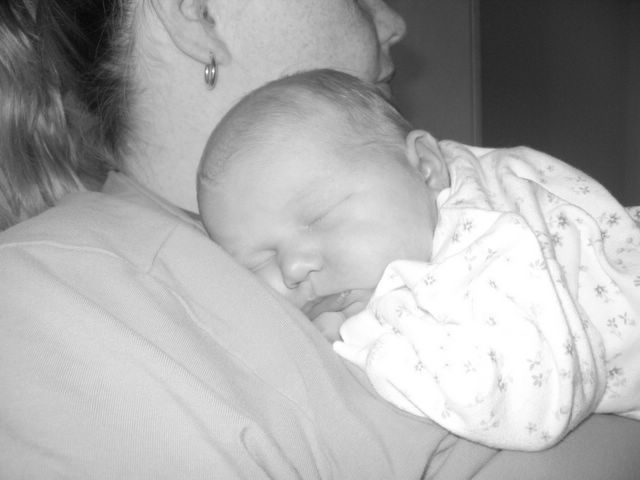
I did stop in Richmond yesterday to meet Baby Meg, who is even better-looking than her photos suggest. Scott took a picture to commemorate the event; if he sends it to me, I'll post it here.
What it means: In football and baseball, the amount of time a ball is in the air before it reaches its destination; in basketball, the amount of time a player is in the air during a jump shot.
How you can use it: To describe a period of time before you fall back to earth.
It's not that I think anyone who reads this blog won't know what "hang time" is; it's just a concept I really like, and it came up last night.
Joseph and I pretended to be club kids and walked around the corner (I'm in D.C.) to The Black Cat, where The Notwist and themselves were playing together as 13 & God.
We'd had a couple of beers; we were far from the oldest people there; and the opening band, Boy in Static, was terrific, moody electronic rock with a kind of percussion machine I'd never seen before.
Joseph smiled at me and said, "It's hang time," and it was. For about three hours, we just stood and moved to the music, forgetting about all the turmoil in our own lives and the world at large. It's the power of live music, and I don't see enough of it.
I did stop in Richmond yesterday to meet Baby Meg, who is even better-looking than her photos suggest. Scott took a picture to commemorate the event; if he sends it to me, I'll post it here.
Wednesday, September 21, 2005
Stripper
Who uses it: Booksellers
What it means: A paperback book with its cover ripped off, declared as "destroyed" to the publisher or distributor. Paperbacks are so cheap to produce that it's not worth it for publishers to reimburse booksellers for shipping them back, so bookstores just return the front covers to prove they've destroyed the book.
How to use it: To describe something that's not pretty or salable, but still serves its main purpose. My first car, a 1981 Mercury Lynx that I bought for $500 from a Foreign Service Officer who was leaving the country, was a stripper, at least until it started belching black smoke. (That's a long story, actually, for another time.)
Working at a bookstore does not pay particularly well, but how many jobs let you answer the question, "What did you do today?" with a casual, "Oh, I did strippers"? (Only slightly-related digression: the highlight of my day, about a month ago, was walking into the Augusta Sam Goody's and asking for the latest by The New Pornographers. Which, by the way, is excellent.)
Anyway, it causes me physical pain to throw a book away. Strippers just kill me, even if most of them are crummy books (and yes, I'll say it: most books published ARE crummy books. Do the math). On my shelves are a paperback copy of East of Eden whose front and back covers are duct-taped to the spine; a paperback of Gone with the Wind missing half its last page, with a replacement last page from another edition folded inside the back cover; and the copy of Johnny Tremain I bought used with my own money when I was 11, which fell into swimming pools and kitchen sinks more than once, and whose pages stick together at certain key junctures because of whatever I was eating while I read it.
I'll throw clothes away, and shoes; broken appliances, scratched-up Tupperware, threadbare linens; but not books, not if there's any alternative.
I do give books away, periodically. I brought several bags back to The Mystery Bookstore before I left L.A., thinking they could go back into circulation. I gave at least one back to Out of the Closet, and I distributed a few to friends and relatives. Still, more than 30 boxes of books made the trip across country... and even (I whisper it) a couple of strippers.
What it means: A paperback book with its cover ripped off, declared as "destroyed" to the publisher or distributor. Paperbacks are so cheap to produce that it's not worth it for publishers to reimburse booksellers for shipping them back, so bookstores just return the front covers to prove they've destroyed the book.
How to use it: To describe something that's not pretty or salable, but still serves its main purpose. My first car, a 1981 Mercury Lynx that I bought for $500 from a Foreign Service Officer who was leaving the country, was a stripper, at least until it started belching black smoke. (That's a long story, actually, for another time.)
Working at a bookstore does not pay particularly well, but how many jobs let you answer the question, "What did you do today?" with a casual, "Oh, I did strippers"? (Only slightly-related digression: the highlight of my day, about a month ago, was walking into the Augusta Sam Goody's and asking for the latest by The New Pornographers. Which, by the way, is excellent.)
Anyway, it causes me physical pain to throw a book away. Strippers just kill me, even if most of them are crummy books (and yes, I'll say it: most books published ARE crummy books. Do the math). On my shelves are a paperback copy of East of Eden whose front and back covers are duct-taped to the spine; a paperback of Gone with the Wind missing half its last page, with a replacement last page from another edition folded inside the back cover; and the copy of Johnny Tremain I bought used with my own money when I was 11, which fell into swimming pools and kitchen sinks more than once, and whose pages stick together at certain key junctures because of whatever I was eating while I read it.
I'll throw clothes away, and shoes; broken appliances, scratched-up Tupperware, threadbare linens; but not books, not if there's any alternative.
I do give books away, periodically. I brought several bags back to The Mystery Bookstore before I left L.A., thinking they could go back into circulation. I gave at least one back to Out of the Closet, and I distributed a few to friends and relatives. Still, more than 30 boxes of books made the trip across country... and even (I whisper it) a couple of strippers.
Tuesday, September 20, 2005
Chill Mark
Who uses it: Glassblowers
What it means: An area on a piece of blown or fire-shaped glass that is cracked on the surface, as a result of over-exposure to steel
How you can use it: To describe an unexpected edge or brittleness in an otherwise kind, gentle person. Handy when discussing Southern women.
Glassblowing is something else I'd like to try one of these days, although it's probably best that I stay away from something that combines open flames with extreme fragility.
I am deep in several projects today and have nothing interesting to say about anything that's not work-related, but I want to acknowledge the passing of Simon Wiesenthal. Our attention span is so short, these days -- the death of the last Holocaust survivors cannot be the end of our collective memories of those horrors, even as new horrors demand our response.
People are capable of really terrible things. Ordinary people become monsters when they turn away, when they separate themselves from the suffering and pretend that the disadvantaged are something other, or less valuable. It happens every day in countless, subtle ways, when we walk past a homeless person or we ignore a mother shoving her crying toddler or we tell ourselves that people deserve what happens to them.
Speaking only for myself, it would be a damn scary world if we got what we deserved.
What it means: An area on a piece of blown or fire-shaped glass that is cracked on the surface, as a result of over-exposure to steel
How you can use it: To describe an unexpected edge or brittleness in an otherwise kind, gentle person. Handy when discussing Southern women.
Glassblowing is something else I'd like to try one of these days, although it's probably best that I stay away from something that combines open flames with extreme fragility.
I am deep in several projects today and have nothing interesting to say about anything that's not work-related, but I want to acknowledge the passing of Simon Wiesenthal. Our attention span is so short, these days -- the death of the last Holocaust survivors cannot be the end of our collective memories of those horrors, even as new horrors demand our response.
People are capable of really terrible things. Ordinary people become monsters when they turn away, when they separate themselves from the suffering and pretend that the disadvantaged are something other, or less valuable. It happens every day in countless, subtle ways, when we walk past a homeless person or we ignore a mother shoving her crying toddler or we tell ourselves that people deserve what happens to them.
Speaking only for myself, it would be a damn scary world if we got what we deserved.
Monday, September 19, 2005
Wadcutter
Who uses it: Competitive handgun and airgun users
What it is: A type of ammunition with a flat or nearly flat front, designed to make perfectly round holes in paper targets. Wadcutter ammunition isn't very aerodynamic, fires at low velocity, and is suitable for use only in revolvers, certain semi-automatic handguns, and airguns.
How to use it: To describe someone who's all show, but not particularly effective.
I don't pretend to know anything about firearms. This word is in Cormac McCarthy's latest novel, and caught my imagination.
Firing a handgun is on my list of things to do before I turn 40 -- along with going up in a hot-air balloon, visiting Paris, finishing a novel, and learning to ride a motorcycle. It's barely possible that I might get to fire a handgun sometime in the next two months. The other things are probably going to have to move to a list of things to do before I turn 50.
Today's destination is the brand new Bayside branch of the Virginia Beach Public Library, a building so great-looking that I almost forgive it for replacing the library of my childhood.
What I can't forgive -- or understand -- is the fact that this new building has a drive-up window. How the heck does that work? You drive up and order one copy of the latest Harry Potter and one Danielle Steele novel to go? I will investigate this, and report back.
What it is: A type of ammunition with a flat or nearly flat front, designed to make perfectly round holes in paper targets. Wadcutter ammunition isn't very aerodynamic, fires at low velocity, and is suitable for use only in revolvers, certain semi-automatic handguns, and airguns.
How to use it: To describe someone who's all show, but not particularly effective.
I don't pretend to know anything about firearms. This word is in Cormac McCarthy's latest novel, and caught my imagination.
Firing a handgun is on my list of things to do before I turn 40 -- along with going up in a hot-air balloon, visiting Paris, finishing a novel, and learning to ride a motorcycle. It's barely possible that I might get to fire a handgun sometime in the next two months. The other things are probably going to have to move to a list of things to do before I turn 50.
Today's destination is the brand new Bayside branch of the Virginia Beach Public Library, a building so great-looking that I almost forgive it for replacing the library of my childhood.
What I can't forgive -- or understand -- is the fact that this new building has a drive-up window. How the heck does that work? You drive up and order one copy of the latest Harry Potter and one Danielle Steele novel to go? I will investigate this, and report back.
Sunday, September 18, 2005
Straw Boss
Who uses it: Workers, foremen, business professors
What it means: A crew member who takes over as supervisor, often -- as my brother James points out -- by self-appointment.
How to use it: When someone's taken too much on himself.
It's fun to imagine what I would do if I ran the world, or if I won a really large sum of money -- not some measly million dollars, but a serious Powerball amount, like $80 million or $100 million. I had this conversation at Bouchercon -- in a bar, of course -- with the author Simon Kernick (read his books), and he scoffed at the idea of it. "Thirty million, forty million" -- he thinks in pounds -- "that's just silly money. What is anyone going to do with that much money?"
"Buy a radio station," I said. "I'd have my own radio station that would only play music I like, and I'd hire all my friends." Simon seemed suitably impressed with this, and asked whether he could have his own show to play really bad songs he liked anyway. That sounded like a good idea to me; I'll be in touch as soon as I have the $100 million.
But then my friend Tara pointed me to this article, and I realized that I just don't have the imagination necessary for true world domination:
Leaving aside the existential futility of trying to obtain penguins from the north, I can't help but admire the scope of the man's vision. It would be funny if it weren't true.
What it means: A crew member who takes over as supervisor, often -- as my brother James points out -- by self-appointment.
How to use it: When someone's taken too much on himself.
It's fun to imagine what I would do if I ran the world, or if I won a really large sum of money -- not some measly million dollars, but a serious Powerball amount, like $80 million or $100 million. I had this conversation at Bouchercon -- in a bar, of course -- with the author Simon Kernick (read his books), and he scoffed at the idea of it. "Thirty million, forty million" -- he thinks in pounds -- "that's just silly money. What is anyone going to do with that much money?"
"Buy a radio station," I said. "I'd have my own radio station that would only play music I like, and I'd hire all my friends." Simon seemed suitably impressed with this, and asked whether he could have his own show to play really bad songs he liked anyway. That sounded like a good idea to me; I'll be in touch as soon as I have the $100 million.
But then my friend Tara pointed me to this article, and I realized that I just don't have the imagination necessary for true world domination:
(AGENCE FRANCE-PRESSE, Sept. 7) Turkmenistan's President-for-life, Saparmurat Niyazov, has ordered a zoo be built for 300 species of birds and animals, including penguins, in the Central Asian republic's Kara Kum desert, state television announced on Tuesday.
The decision comes a year after the 65-year-old strongman announced construction of an ice palace capable of holding 1 000 people.
A Turkish firm is expected to complete construction of the 40ha park within a year, the TV report said.
"The zoo will be situated north of Ashkhabad where the Kara Kum desert begins. The animals will live there in conditions close to those of their natural habitat and the zoo will cost several million dollars," said an official at the Turkmen environment ministry, which will select the animals.
"We are examining the possibility of acquiring animals from the four corners of the planet, such as penguins from the north," the source said.
The zoo is the latest in a series of grandiose projects ordered by the man who styles himself "Turkmenbashi", the leader of all Turkmen, whose gas-rich country of five million is dotted with statues of himself and his mother.
In August last year, he ordered that a giant ice palace be built in mountains north of the capital, but doubts were raised about whether it could be sustained in a desert country that receives just 100mm to 250mm of precipitation a year.
Temperatures average minus one degree Celsius in winter and range up to 30 degrees Celsius in summer.
Leaving aside the existential futility of trying to obtain penguins from the north, I can't help but admire the scope of the man's vision. It would be funny if it weren't true.
Saturday, September 17, 2005
Byway
Who uses it: Highway planners and mapmakers
What it means: According to the Virginia Department of Transportation, a byway is a secondary road "containing aesthetic or cultural value near areas of historical, natural or recreational significance." States designate byways in order to draw traffic and tourist dollars to towns that might otherwise be neglected.
How you can use it: As a metaphor for any road less traveled.
Late posting today, because I spent the night with friends in Arlington -- thanks, John, Tara, Jack & Kate -- and drove down to Virginia Beach this morning. Dizzy did not want to get back in the car, after the eight hours we spent on the road yesterday (overturned tractor-trailer on the NJ Turnpike). I don't blame him. I'm so tired myself that my eyes are crossing, and Dizzy is currently passed out on the floor of my parents' family room, with his paws in the air.
Today's term refers to the route I took -- Highway 17 from Fredericksburg to Yorktown, also known as the Tidewater Trail and the Historyland Highway. It's my favorite drive, one I've been making for more than 20 years now. It still feels like the way home, though I haven't lived in Virginia Beach since 1982.
Route 17 passes through Port Royal, Tappahannock, Kilmarnock and Gloucester, through old forests and farmland and across the James River. I had the air conditioner blasting and Pete Townshend in the CD player, and it was a beautiful day, despite the heat. It's 92 degrees here... Dizzy isn't used to this kind of heat any more, and neither am I.
What it means: According to the Virginia Department of Transportation, a byway is a secondary road "containing aesthetic or cultural value near areas of historical, natural or recreational significance." States designate byways in order to draw traffic and tourist dollars to towns that might otherwise be neglected.
How you can use it: As a metaphor for any road less traveled.
Late posting today, because I spent the night with friends in Arlington -- thanks, John, Tara, Jack & Kate -- and drove down to Virginia Beach this morning. Dizzy did not want to get back in the car, after the eight hours we spent on the road yesterday (overturned tractor-trailer on the NJ Turnpike). I don't blame him. I'm so tired myself that my eyes are crossing, and Dizzy is currently passed out on the floor of my parents' family room, with his paws in the air.
Today's term refers to the route I took -- Highway 17 from Fredericksburg to Yorktown, also known as the Tidewater Trail and the Historyland Highway. It's my favorite drive, one I've been making for more than 20 years now. It still feels like the way home, though I haven't lived in Virginia Beach since 1982.
Route 17 passes through Port Royal, Tappahannock, Kilmarnock and Gloucester, through old forests and farmland and across the James River. I had the air conditioner blasting and Pete Townshend in the CD player, and it was a beautiful day, despite the heat. It's 92 degrees here... Dizzy isn't used to this kind of heat any more, and neither am I.
Friday, September 16, 2005
Safety & Soundness
Who uses it: Bank examiners
What it means: The financial condition of any institution (bank, credit union, savings association) that takes money from the public. Bank regulation and supervision fall into the two main categories of "Safety & Soundness" -- underlying financial health -- and "Compliance" -- things like consumer protection.
How you can use it: When discussing whether someone or something is trustworthy. "He's entertaining, but don't go looking for safety and soundness there."
Many financial terms lend themselves to everyday conversation. Warren Zevon turned a bunch of them -- though not this one -- into a lovely ballad called "Nobody's in Love this Year," which closes the idiosyncratic Transverse City album. All the times I saw him in concert, he never sang this song -- maybe it was just too sad, although I did see him do "Accidentally Like a Martyr" at least once, and that has to be the saddest rock song ever written.
I'm a little distracted, can you tell? What day is this? What town am I in? It's Friday, this is Albany, and I'm about to head south.
The New York State Library dwarfs the Maine State Library, as you might imagine. A huge storm system swept through Albany yesterday, and I had no idea, until I walked outside at lunchtime and was nearly swept away. I took refuge with several homeless people in a small McDonald's downhill from the Empire State Plaza, and one of the gentlemen offered to go "take care of" anyone who might make me unhappy, at any time. It was the best offer I'd had in a long time, and it made me smile.
I've had almost no time for casual reading this week, so it was good that the one novel I did read was terrific, and the non-fiction book I read was pretty amusing, too.
Chuck Hogan, The Blood Artists. I was reading this book, a horrifying thriller about infectious disease, at the aforementioned inner-city McDonald's -- and looked up to see one of the food workers chewing on her fake fingernail, then using that hand -- that nail -- to open a paper bag for french fries. I'm not sure it's something I would have paid any attention to, before; now, after reading this book, I am never eating McDonald's french fries again. NEVER. (And that's a good thing for many reasons.) Anyway, this book is set in the near future, when fear of infection changes the way we all live. Doctors Stephen Pearse and Peter Maryk are researchers who respond to an outbreak of a new, deadly hemorrhagic virus in Africa. They think they've contained it -- when everyone has died -- but Pearse's misguided act of compassion sets the virus free in the world, in a most insidious way. To say much more about how the virus operates in the world would give the plot away, so I will just say this is one of the most original, plausible, frightening thrillers I've read in a long time. Reviewers compared it to The Stand and The Hot Zone, but it reminded me even more of the epic Victorian adventure novels of H. Rider Haggard, and even Joseph Conrad. Great stuff, not for the squeamish.
Stephen R. Datz, TOP DOLLAR PAID! The Complete Guide to Selling Your Stamps. Don't worry, I read this for work... I am not taking up stamp collecting. In fact, based on this book, my advice to everyone is not to take up stamp collecting, unless those little colored pieces of paper fill your soul with joy. If that's the case, you won't mind taking such good care of them -- handling them with tongs -- laying them between sheets of acid-free paper -- and spending all your free time with other people who share your passion. Speaking only for myself, I have a few other things to do. This book is excellent -- short, to the point, and funny -- but it needs to be updated for the post-Ebay world.
What it means: The financial condition of any institution (bank, credit union, savings association) that takes money from the public. Bank regulation and supervision fall into the two main categories of "Safety & Soundness" -- underlying financial health -- and "Compliance" -- things like consumer protection.
How you can use it: When discussing whether someone or something is trustworthy. "He's entertaining, but don't go looking for safety and soundness there."
Many financial terms lend themselves to everyday conversation. Warren Zevon turned a bunch of them -- though not this one -- into a lovely ballad called "Nobody's in Love this Year," which closes the idiosyncratic Transverse City album. All the times I saw him in concert, he never sang this song -- maybe it was just too sad, although I did see him do "Accidentally Like a Martyr" at least once, and that has to be the saddest rock song ever written.
I'm a little distracted, can you tell? What day is this? What town am I in? It's Friday, this is Albany, and I'm about to head south.
The New York State Library dwarfs the Maine State Library, as you might imagine. A huge storm system swept through Albany yesterday, and I had no idea, until I walked outside at lunchtime and was nearly swept away. I took refuge with several homeless people in a small McDonald's downhill from the Empire State Plaza, and one of the gentlemen offered to go "take care of" anyone who might make me unhappy, at any time. It was the best offer I'd had in a long time, and it made me smile.
I've had almost no time for casual reading this week, so it was good that the one novel I did read was terrific, and the non-fiction book I read was pretty amusing, too.
Chuck Hogan, The Blood Artists. I was reading this book, a horrifying thriller about infectious disease, at the aforementioned inner-city McDonald's -- and looked up to see one of the food workers chewing on her fake fingernail, then using that hand -- that nail -- to open a paper bag for french fries. I'm not sure it's something I would have paid any attention to, before; now, after reading this book, I am never eating McDonald's french fries again. NEVER. (And that's a good thing for many reasons.) Anyway, this book is set in the near future, when fear of infection changes the way we all live. Doctors Stephen Pearse and Peter Maryk are researchers who respond to an outbreak of a new, deadly hemorrhagic virus in Africa. They think they've contained it -- when everyone has died -- but Pearse's misguided act of compassion sets the virus free in the world, in a most insidious way. To say much more about how the virus operates in the world would give the plot away, so I will just say this is one of the most original, plausible, frightening thrillers I've read in a long time. Reviewers compared it to The Stand and The Hot Zone, but it reminded me even more of the epic Victorian adventure novels of H. Rider Haggard, and even Joseph Conrad. Great stuff, not for the squeamish.
Stephen R. Datz, TOP DOLLAR PAID! The Complete Guide to Selling Your Stamps. Don't worry, I read this for work... I am not taking up stamp collecting. In fact, based on this book, my advice to everyone is not to take up stamp collecting, unless those little colored pieces of paper fill your soul with joy. If that's the case, you won't mind taking such good care of them -- handling them with tongs -- laying them between sheets of acid-free paper -- and spending all your free time with other people who share your passion. Speaking only for myself, I have a few other things to do. This book is excellent -- short, to the point, and funny -- but it needs to be updated for the post-Ebay world.
Thursday, September 15, 2005
Lingua Franca
Who uses it: Anthropologists and linguists
What it means: Latin, "the language of the Franks;" any third language that two people who do not speak each other's language can use to communicate. English has become the lingua franca of business in most of the world; the Wall Street Journal ran a great article several years ago about the English spoken in a Japanese-owned factory in Eastern Europe.
How you can use it: As a metaphor for any common ground. "My eyes glazed over when he talked about work, but the new television season provided a kind of lingua franca."
Strange I should use that example, actually, because while I'm aware that the new television season is starting, I seem to have stopped watching network TV. At home, I watch nothing but the news and the movie channels; when I'm traveling, I've all but stopped turning the television on. I don't know whether this is self-preservation from over-stimulation, or some deeper manifestation of growing eccentricity. Both, probably, as those two things must be related.
I'm in Albany today, looking forward to spending the day in the newspaper archives of the New York State Library. Dizzy was not thrilled to leave the Kinsolvings' yesterday, but he's a good sport about all the traveling. The one drawback of traveling with a dog is that he can't navigate; the good side is that he never asks, "Are we lost?" or "Are you sure this is the right way?"
Because I often get lost, and I did get lost -- a little -- yesterday. I'm resigned to it, it's my nature, and I've decided that it's even part of my process, on a cosmic scale. If you know exactly how to get from A to B, you never really notice anything in between. You learn a lot more if you let yourself get lost once in a while.
It's that kind of attitude, of course, that turns a four-hour library visit into an eight-hour one. I need to be a little more disciplined about that today, since Dizzy will be alone at the Econo-Lodge. He doesn't watch network TV, either; I leave "Animal Planet" on for him. Don't tease me about this.
What it means: Latin, "the language of the Franks;" any third language that two people who do not speak each other's language can use to communicate. English has become the lingua franca of business in most of the world; the Wall Street Journal ran a great article several years ago about the English spoken in a Japanese-owned factory in Eastern Europe.
How you can use it: As a metaphor for any common ground. "My eyes glazed over when he talked about work, but the new television season provided a kind of lingua franca."
Strange I should use that example, actually, because while I'm aware that the new television season is starting, I seem to have stopped watching network TV. At home, I watch nothing but the news and the movie channels; when I'm traveling, I've all but stopped turning the television on. I don't know whether this is self-preservation from over-stimulation, or some deeper manifestation of growing eccentricity. Both, probably, as those two things must be related.
I'm in Albany today, looking forward to spending the day in the newspaper archives of the New York State Library. Dizzy was not thrilled to leave the Kinsolvings' yesterday, but he's a good sport about all the traveling. The one drawback of traveling with a dog is that he can't navigate; the good side is that he never asks, "Are we lost?" or "Are you sure this is the right way?"
Because I often get lost, and I did get lost -- a little -- yesterday. I'm resigned to it, it's my nature, and I've decided that it's even part of my process, on a cosmic scale. If you know exactly how to get from A to B, you never really notice anything in between. You learn a lot more if you let yourself get lost once in a while.
It's that kind of attitude, of course, that turns a four-hour library visit into an eight-hour one. I need to be a little more disciplined about that today, since Dizzy will be alone at the Econo-Lodge. He doesn't watch network TV, either; I leave "Animal Planet" on for him. Don't tease me about this.
Wednesday, September 14, 2005
Q&D
Who uses it: Computer programmers
What it means: Short for "quick and dirty," a patch to fix a small error in a computer process. My Aunt Debbie explains: "Sometimes a computer process might get screwed up (due to a bad feed or a program change error). The main program itself gets fixed, but another 'one time' program has to be written to fix the broken database. The 'q&d' is the one-time program."
How you can use it: In any situation where you don't want something elaborate, you just want something that works. "I don't need the whole story, just give me the Q&D." "Do you really have to replace the whole machine? What's the Q&D?"
I'm looking over the past several days' entries, and see that I've revealed Answer Girl's best-kept secret: I don't actually know much. I just have an enormous family, and they all know about different things, so whatever comes up, I can just ask a relative. Handy.
And speaking of big families, today we celebrate the addition of Margaret Adele to the Lavinder family. Her brothers already call her "Baby Meg," and we can only hope that she will outgrow that sometime before her 50th birthday. Welcome to the world, Meg.
Today Dizzy and I are headed to Albany, for more research on yet another project. It'll be a relief to be back in cell phone range, though the isolation's been nice.
What it means: Short for "quick and dirty," a patch to fix a small error in a computer process. My Aunt Debbie explains: "Sometimes a computer process might get screwed up (due to a bad feed or a program change error). The main program itself gets fixed, but another 'one time' program has to be written to fix the broken database. The 'q&d' is the one-time program."
How you can use it: In any situation where you don't want something elaborate, you just want something that works. "I don't need the whole story, just give me the Q&D." "Do you really have to replace the whole machine? What's the Q&D?"
I'm looking over the past several days' entries, and see that I've revealed Answer Girl's best-kept secret: I don't actually know much. I just have an enormous family, and they all know about different things, so whatever comes up, I can just ask a relative. Handy.
And speaking of big families, today we celebrate the addition of Margaret Adele to the Lavinder family. Her brothers already call her "Baby Meg," and we can only hope that she will outgrow that sometime before her 50th birthday. Welcome to the world, Meg.
Today Dizzy and I are headed to Albany, for more research on yet another project. It'll be a relief to be back in cell phone range, though the isolation's been nice.
Tuesday, September 13, 2005
Flensing
Who uses it: Whalers
What it means: Stripping the blubber or skin from a whale
How you can use it: When you too need to cut away the fat. "Let's take another look at this budget, and see if we can flense it a little more," or, "If this kundalini yoga class doesn't work on my upper arms, it's time to consult a flenser."
I may be a little farther behind the ball than usual this morning, but why is this news? And why would the editors of my online service classify the story as "Other Entertainment"?
Lord knows, I don't want to eat whale meat... but Japanese schoolchildren probably don't want to eat Velveeta, and I seriously doubt that Japanese newspapers run stories about how interesting and quaint it is that Americans eat something called "pasteurized processed cheese food."
Oh, yes, I'm a little cranky this morning... the e-mail at the top of my in-box today was a newsletter from an online diet program, reassuring its subscribers that a minor setback like Katrina doesn't have to disrupt their dieting goals. Silly me! Why didn't I see that being a refugee is actually a golden opportunity for serious weight loss? Next week's issue: "Chemotherapy: Your partner in the struggle against overeating."
What it means: Stripping the blubber or skin from a whale
How you can use it: When you too need to cut away the fat. "Let's take another look at this budget, and see if we can flense it a little more," or, "If this kundalini yoga class doesn't work on my upper arms, it's time to consult a flenser."
I may be a little farther behind the ball than usual this morning, but why is this news? And why would the editors of my online service classify the story as "Other Entertainment"?
TOKYO (AP) - A public junior high school in Japan's northern port town of Kushiro had a new item on the menu for its students Monday - rice topped with whale curry.
The meat is from minke whales the local whalers had caught just off the coast of Kushiro on Japan's northernmost island of Hokkaido, Kyodo News agency reported.
Whale meat returned to public school lunches in Kushiro, the former whaling hub about 560 miles northeast of Tokyo, last year for the first time in 38 years as part of the city-sponsored campaign to promote whale meat.
Whale meat dishes, however, are not on the menu every day.
The whale curry will be served at elementary schools in town on Tuesday, and whale meat croquettes are planned in January, Kyodo said.
Lord knows, I don't want to eat whale meat... but Japanese schoolchildren probably don't want to eat Velveeta, and I seriously doubt that Japanese newspapers run stories about how interesting and quaint it is that Americans eat something called "pasteurized processed cheese food."
Oh, yes, I'm a little cranky this morning... the e-mail at the top of my in-box today was a newsletter from an online diet program, reassuring its subscribers that a minor setback like Katrina doesn't have to disrupt their dieting goals. Silly me! Why didn't I see that being a refugee is actually a golden opportunity for serious weight loss? Next week's issue: "Chemotherapy: Your partner in the struggle against overeating."
Monday, September 12, 2005
Cinderellas
Who uses it: Stamp collectors
What it means: "Cinderellas" are things that look like stamps but were never used for postage -- examples include revenue stamps, Easter Seals, and souvenir labels. Collectors call them "Cinderellas," because they're not part of the official catalogs -- they're not invited to the collectors' ball, no matter how pretty they might be.
How you can use it: To refer to anything you're excluding from a group or leaving behind. "I'll take these three apples, but that bruised one's a Cinderella."
Happy birthday today to Frau Susanne Schulz, the belle of every ball.
Late yesterday afternoon, my friend Susan and I were driving around the Bridgewater area, which is an interesting mix of old farms and spectacularly wealthy estates. We passed a weekend farm with two large catapults in the front field. Susan told me that they're for the owners' annual Pumpkin Chunking event, when they invite the whole town over for a picnic and a pumpkin-catapulting contest.
What could be more satisfying than hurling a pumpkin a great distance? Catapults -- or trebuchets -- satisfy something deep in the human heart, or at least in mine. For more on this subject, I strongly recommend Jim Paul's book, Catapult: Harry and I Build a Siege Weapon. And if you build your own, invite me over. I'll bring the pumpkins.
What it means: "Cinderellas" are things that look like stamps but were never used for postage -- examples include revenue stamps, Easter Seals, and souvenir labels. Collectors call them "Cinderellas," because they're not part of the official catalogs -- they're not invited to the collectors' ball, no matter how pretty they might be.
How you can use it: To refer to anything you're excluding from a group or leaving behind. "I'll take these three apples, but that bruised one's a Cinderella."
Happy birthday today to Frau Susanne Schulz, the belle of every ball.
Late yesterday afternoon, my friend Susan and I were driving around the Bridgewater area, which is an interesting mix of old farms and spectacularly wealthy estates. We passed a weekend farm with two large catapults in the front field. Susan told me that they're for the owners' annual Pumpkin Chunking event, when they invite the whole town over for a picnic and a pumpkin-catapulting contest.
What could be more satisfying than hurling a pumpkin a great distance? Catapults -- or trebuchets -- satisfy something deep in the human heart, or at least in mine. For more on this subject, I strongly recommend Jim Paul's book, Catapult: Harry and I Build a Siege Weapon. And if you build your own, invite me over. I'll bring the pumpkins.
Sunday, September 11, 2005
Res Ipsa Loquitur
Who uses it: Lawyers
What it means: Latin, "The thing speaks for itself." The common law of torts uses this phrase to describe accidents that were obviously the result of negligence, although it's not necessarily clear whose negligence.
How to use it: When you don't need to explain something. My friend Jen gave me this example: "I come in the living room. Grace (her four-year-old) is the only person in the living room and a picture is knocked over. Even though I don’t know exactly how it happened, it clearly happened. Res ipsa loquitur."
Negligence in preparations for and responses to Katrina? Res ipsa loquitur. The line for resignations should be forming on the right, starting at ground level and reaching high, high up into Washington -- but later, not now. Right now, everybody just needs to keep working at this, until the families are reunited, the bodies are recovered, and the toxic waste is removed from the shores of Louisiana, Mississippi and Alabama.
I don't dare turn the Sunday morning TV shows on, because I'll put a shoe through the screen, and I'm a guest here. I have a hard-earned reputation for being a good houseguest, and Michael Chernoff is not going to wreck that for me.
One thing that has been really great is seeing the families of the 9/11 victims and survivors rallying to the needs of Katrina's victims. It's a precarious universe, and everything can change, through no fault of our own, in the space of a minute or an hour or a day. If I thought too much about that, I wouldn't be able to leave my apartment.
What it means: Latin, "The thing speaks for itself." The common law of torts uses this phrase to describe accidents that were obviously the result of negligence, although it's not necessarily clear whose negligence.
How to use it: When you don't need to explain something. My friend Jen gave me this example: "I come in the living room. Grace (her four-year-old) is the only person in the living room and a picture is knocked over. Even though I don’t know exactly how it happened, it clearly happened. Res ipsa loquitur."
Negligence in preparations for and responses to Katrina? Res ipsa loquitur. The line for resignations should be forming on the right, starting at ground level and reaching high, high up into Washington -- but later, not now. Right now, everybody just needs to keep working at this, until the families are reunited, the bodies are recovered, and the toxic waste is removed from the shores of Louisiana, Mississippi and Alabama.
I don't dare turn the Sunday morning TV shows on, because I'll put a shoe through the screen, and I'm a guest here. I have a hard-earned reputation for being a good houseguest, and Michael Chernoff is not going to wreck that for me.
One thing that has been really great is seeing the families of the 9/11 victims and survivors rallying to the needs of Katrina's victims. It's a precarious universe, and everything can change, through no fault of our own, in the space of a minute or an hour or a day. If I thought too much about that, I wouldn't be able to leave my apartment.
Subscribe to:
Posts (Atom)